
Written and medically reviewed by Dr. Scott Maymon, ND, MPH and Dr. Sarah Stone, ND, Pure Body Health, South Tempe, AZ.
Key takeaways
- Body contouring and peptide therapy are supportive aids, not a weight-loss cure. They support a plan, they do not replace nutrition, movement, and medical care.
- Non-surgical body contouring helps shape and tone stubborn areas on a body that is already at or near a stable weight, with no surgery and no downtime.
- Peptide therapy is used under medical supervision as a supportive tool for metabolism, muscle preservation, and recovery.
- These tools suit people already doing the core work who want to finish and refine a result, not people looking for a shortcut.
- This post is about shaping and finishing tools. If your concern is loose skin, our companion guide on how to prevent loose skin during weight loss is the better read. Results vary, and candidacy is determined in a consultation.
Once the weight starts coming off, most people run into a new set of questions. What do I do about the areas that will not budge? How do I keep the muscle I worked for? Is there anything that helps me finish strong and actually look the way the number on the scale suggests? Body contouring and peptide therapy come up a lot in those conversations. They can genuinely help, but only when you understand what they are for. Used as finishing and supporting tools inside a real plan, they add polish. Used as a hoped-for shortcut, they disappoint.
Do body contouring and peptides actually help you lose weight?
They are supportive tools, not a weight-loss cure. Non-surgical body contouring helps shape and tone specific areas, and peptide therapy may support metabolism, muscle preservation, and recovery. Neither one melts away pounds on its own. The weight loss itself still comes from nutrition, consistent movement, and medically supervised care, and results vary from person to person.
The honest framing is simple: aids support your plan, they do not replace it. Nutrition, movement, and medical care do the heavy lifting. Contouring and peptides help you shape and finish what that work builds.
That distinction is not just a disclaimer, it is the key to using these tools well. When you know what each one is designed to do, you can slot it in at the right moment and get real value from it, rather than expecting it to do a job it was never meant to do.
What is non-surgical body contouring?
Non-surgical body contouring uses devices to target stubborn areas and help the body look more shaped and toned, without surgery, incisions, or downtime. At Pure Body Health, our non-surgical body contouring options include a low-level laser system, which works gently on areas that tend to hold on even after you have lost weight everywhere else.
The most important thing to understand is timing. Body contouring is a finishing step, not a weight-loss method. It works best on a body that is already at or near a stable, healthy weight, where a few specific areas are lagging behind the rest of your progress.
What laser body contouring can and cannot do
A low-level laser body-contouring system is designed to help you look more shaped and toned in targeted spots. It is comfortable, non-invasive, and requires no recovery time, which is why people fit sessions in around normal life. If you want the full picture on how the technology works, our posts on how the Zerona Z6 laser helps you look more toned and on slimming without surgery go deeper.
What it is not is a substitute for losing weight, and it is a separate question from loose skin. If your main concern is skin that has lost its snap after significant weight loss, contouring is the wrong tool, and firming approaches like RF microneedling to firm and tone skin or the strategies in our loose-skin guide are the better fit. Deflated, thinner areas after rapid loss are a different issue again, one we cover in our companion piece on volume loss after rapid weight loss.
How does peptide therapy support a weight-loss plan?
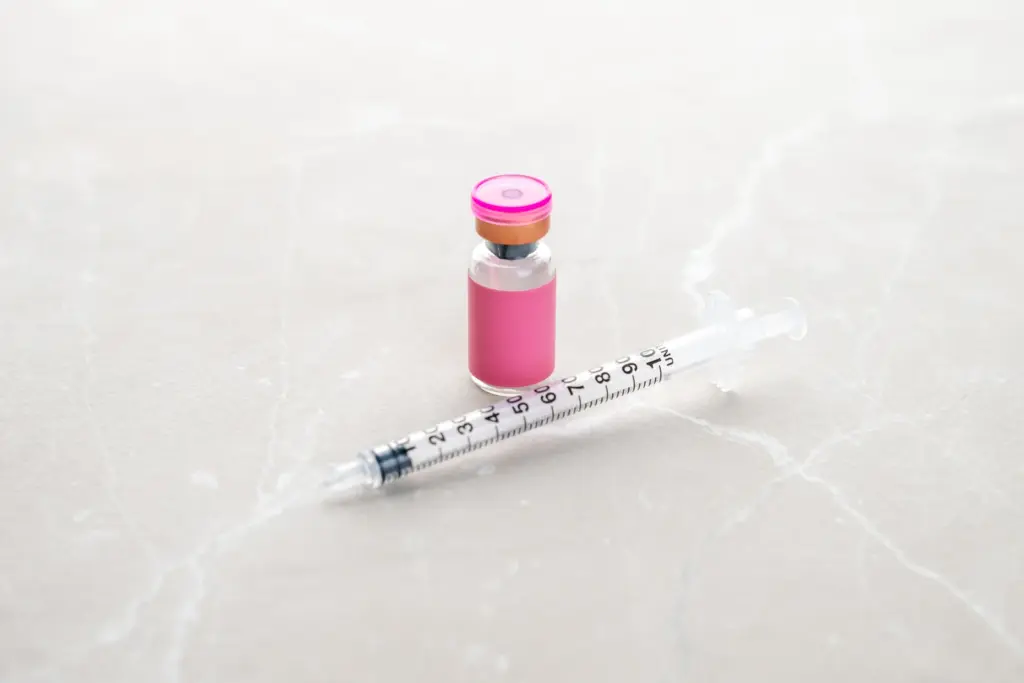
Peptides are short chains of amino acids that act as signals in the body. Some are studied for their role in metabolism, lean muscle, and recovery, which is why peptide therapy can support a weight-loss plan indirectly. It is a supportive tool used under medical supervision, not a stand-alone weight-loss treatment, and a provider determines whether it is appropriate for you in a consultation.
Where peptides tend to earn their place is in the parts of weight loss that people overlook until they become a problem: holding on to muscle while losing fat, keeping energy steady, and recovering well enough to stay consistent with movement.
Muscle preservation, metabolism, and recovery
Losing weight quickly can cost you muscle along with fat, and muscle is exactly what keeps your metabolism healthy and your body looking toned. Supporting lean muscle is one reason certain peptides are of interest during active weight loss. One example studied for its role in fat loss and lean mass is described in our overview of a peptide studied for fat loss and muscle growth. Which peptide, if any, suits you depends on your health history, your goals, and a provider’s judgment.
Peptides do not replace protein, resistance training, or sleep. They are used to support the same goals those basics serve, which is why they only make sense inside a plan that already has those basics in place.
Who are these aids right for?
Good candidates are people already doing the core work of nutrition, movement, and medical care who want help shaping stubborn areas or supporting metabolism and muscle. These tools suit finishing and refining a result, not replacing the foundation. If you are still building the foundation, that is where your energy belongs first, and candidacy for any aid is determined in a consultation.
The table below is a quick way to see where each tool fits, and where it does not.
| Your goal | Best-fit tool | Where it fits in the plan |
|---|---|---|
| Shape a stubborn area at a stable weight | Non-surgical body contouring | Finishing step, once weight is steady |
| Protect muscle and support metabolism and recovery | Peptide therapy (supervised) | Supportive, during active weight loss |
| Firm skin that has lost its snap | RF microneedling and skin-firming care | Skin quality, separate from fat loss |
| Actually lose the weight | Medically supervised weight-loss plan | The foundation everything else supports |
How aids slot into a supervised weight-loss plan
Aids work best when a provider sequences them into the larger plan, rather than adding them at random. In a medically supervised weight-loss program, the foundation comes first, and the supporting tools come in when they can actually help.
- Build the foundation. Nutrition that protects muscle, consistent movement, hydration, and support for the hormones and gut function that shape metabolism. This is where the weight loss happens.
- Add supportive tools where they help. Peptide therapy may come in during active loss to support metabolism, muscle, and recovery, always under supervision and only if appropriate for you.
- Finish and refine. Once your weight is stable, non-surgical body contouring can target the stubborn areas that lagged behind, and skin-firming care can address texture and tone.
- Reassess. A provider checks what is working, adjusts the plan, and makes sure any aid is still serving your goals rather than becoming a crutch.
If you are still at the start and deciding what belongs in your plan at all, our honest look at whether weight-loss injections are right for you is a useful companion, because the same principle applies: every tool is judged by how well it supports the whole plan.
At Pure Body Health in South Tempe, our licensed naturopathic physicians look at the whole picture, not just one tool. If you are wondering how body contouring or peptide therapy might fit your goals, a consultation is the place to find out. Book a consultation or call (480) 427-0442.
Setting realistic expectations
The most satisfied patients are the ones who use these tools for what they do well and keep their expectations honest. Body contouring helps you look more shaped and toned in specific areas, results build gradually, and they vary from person to person. Peptide therapy supports the process rather than driving it, and it belongs under medical supervision. Neither is a weight-loss cure, and neither replaces the daily work that makes any result last. Held to that standard, both can be a genuinely rewarding way to finish strong.
About the authors. Dr. Scott Maymon, ND, MPH, and Dr. Sarah Stone, ND, are the licensed naturopathic physicians of Pure Body Health in South Tempe, Arizona (AZ licenses #15-1497 and #15-1496). Both earned their doctorates at the Southwest College of Naturopathic Medicine in Tempe, and they work together across hormone and metabolic health, weight management, regenerative medicine, aesthetics, and men’s and women’s health. They have cared for the South Tempe and greater Phoenix community since 2015, and they write and review this content together.
Frequently asked questions
Do body contouring and peptides help you lose weight?
They are supportive tools, not a weight-loss cure. Non-surgical body contouring helps shape and tone specific areas, and peptide therapy may support metabolism, muscle preservation, and recovery. Actual weight loss still comes from nutrition, movement, and medical care, and results vary from person to person.
What is non-surgical body contouring after weight loss?
It uses devices, such as a low-level laser system, to target stubborn areas and help the body look more shaped and toned without surgery or downtime. It is best used on a body that is already at or near a stable, healthy weight, as a finishing step rather than a way to lose pounds.
Can peptide therapy support weight loss?
Some peptides are studied for their role in metabolism, lean muscle, and recovery, which can support a weight-loss plan indirectly. Peptide therapy is a supportive tool used under medical supervision, not a stand-alone weight-loss treatment. A provider determines whether it is appropriate for you in a consultation.
Who is a good candidate for body contouring or peptides?
Good candidates are people already doing the core work of nutrition, movement, and medical care who want help shaping stubborn areas or supporting metabolism and muscle. These aids suit finishing and refining a result, not replacing the foundation. Candidacy is determined in a consultation with a licensed provider.
Are these aids a substitute for a medical weight-loss plan?
No. Body contouring and peptide therapy work best as supportive tools within a medically supervised plan, alongside nutrition, movement, hydration, and hormone and gut support. They add polish and support, but the plan itself does the primary work, and results vary and are not guaranteed.
This article is educational and is not medical advice. It is not intended to diagnose, treat, prevent, or cure any disease. Body contouring and peptide therapy are not appropriate for everyone, and candidacy is determined by a licensed provider. Individual results vary. Always talk with your healthcare provider about your own situation.