
Written and medically reviewed by Dr. Scott Maymon, ND, MPH and Dr. Sarah Stone, ND, Pure Body Health, South Tempe, AZ.
Key takeaways
- Loose skin appears because fat shrinks faster than skin and collagen can retract, leaving less underneath to support the skin that is left.
- How much laxity you see depends on how much and how fast you lost, plus your age, genetics, and sun history. Slow loss and protecting muscle make a real difference.
- The face can look flatter or more hollow because it loses fat pads that give it a cushioned, youthful shape, not because anything is wrong.
- Mild to moderate laxity responds to collagen-stimulating treatments, PRP, and rebuilding muscle, and prevention starts during your weight loss.
- Significant hanging skin after very large weight loss may need a surgical consultation elsewhere. In-office treatments firm and restore, but do not remove major excess skin.
Reaching a weight-loss goal should feel like a win, and it is one. So it can be disheartening when the mirror shows loose skin along the arms or belly, or a face that looks flatter and more tired than it did at a higher weight. If that is where you are, nothing has gone wrong. This is a predictable trade-off of losing fat quickly, and there is a great deal you can do about it, both to prevent it and to firm and restore what is already there.
Why does rapid weight loss leave loose skin?
Loose skin appears when you lose fat faster than your skin can keep up. Skin is elastic, but its ability to shrink back is slow and limited. Fat comes off quickly, so the skin that once stretched over a larger body is suddenly left with much less volume underneath to fill and support it.
Loose skin after weight loss is a volume problem as much as a skin problem. Fat shrinks in weeks, but collagen and elastin retract over months, and with less fat and muscle beneath the surface, there is simply less to hold the skin taut.
Two things are happening at once. The structural proteins in your skin, collagen and elastin, only remodel so fast, and years of being stretched can leave them slack. And fat under the skin also provides shape and support, so when it goes, the skin above it loses its scaffolding.
What decides how much loose skin you get
Not everyone ends up with the same result. The differences come down to a handful of factors, some you can influence and some you cannot.
| Factor | Why it matters | Can you influence it? |
|---|---|---|
| How much you lost | Larger losses stretch and then empty more skin, so more laxity is likely | Partly, through your goal and pace |
| How fast you lost it | Rapid loss gives skin and collagen no time to retract gradually | Yes, a steady pace helps |
| Age | Collagen and elastin renew more slowly and are less springy over time | No, but treatment can support it |
| Genetics | Baseline skin thickness and elasticity are partly inherited | No |
| Sun history | Long-term sun exposure breaks down collagen and elastin | Going forward, yes |
| Muscle preserved | Muscle beneath the skin provides volume and support | Yes, protein and resistance training |
Why does my face look older or hollow after losing weight?
Because your face carries fat too, and it is some of the first to go. The face has cushioning fat pads that give it a soft, youthful shape. When you lose weight quickly, those pads deflate along with fat everywhere else, and the result can be a face that looks flatter, more hollow at the cheeks and temples, and more lined. Many people notice this deflated, slightly older look with fast fat loss, and it is a genuine, common concern, not vanity.
The reassuring part is that facial volume loss responds well to the same principles that help the body: supporting collagen, restoring volume, and in-office treatments that stimulate your own tissue. If crepey texture is part of what you are seeing, our guide on how to treat crepey skin on the face and neck goes deeper on that concern.
How do you prevent loose skin during weight loss?

Prevention beats correction, and the best time to protect your skin is while you are still losing. The idea is simple: give your skin and muscle every chance to keep up with the fat you are shedding. Our article on how to prevent loose skin during weight loss covers this in full, and here are the essentials.
- Lose at a steady pace. A gradual rate of loss gives collagen and elastin time to retract instead of being left behind all at once.
- Prioritize protein. Protein protects the muscle that supports your skin and supplies the amino acids your body uses to build collagen. Under-eating protein is a common reason people lose muscle along with fat.
- Do resistance training. Building or preserving muscle refills the space beneath the skin, so it drapes over more supportive volume.
- Hydrate, inside and out. Well-hydrated skin is more supple and resilient. Our guide on how to hydrate skin from the inside out pairs nutrition with topical care.
- Do not crash diet. Very aggressive calorie restriction burns muscle and rushes fat loss, the exact combination that leaves the most laxity.
- Support collagen early. Adequate protein, vitamin C, and skin care during weight loss lay the groundwork. Acting before problems appear is the idea behind prejuvenation.
The single most protective thing you can do while losing weight is keep your muscle. Muscle is the support structure the skin drapes over, and protecting it with protein and resistance training does more for how you look than almost anything else.
How do you tighten skin after weight loss without surgery?
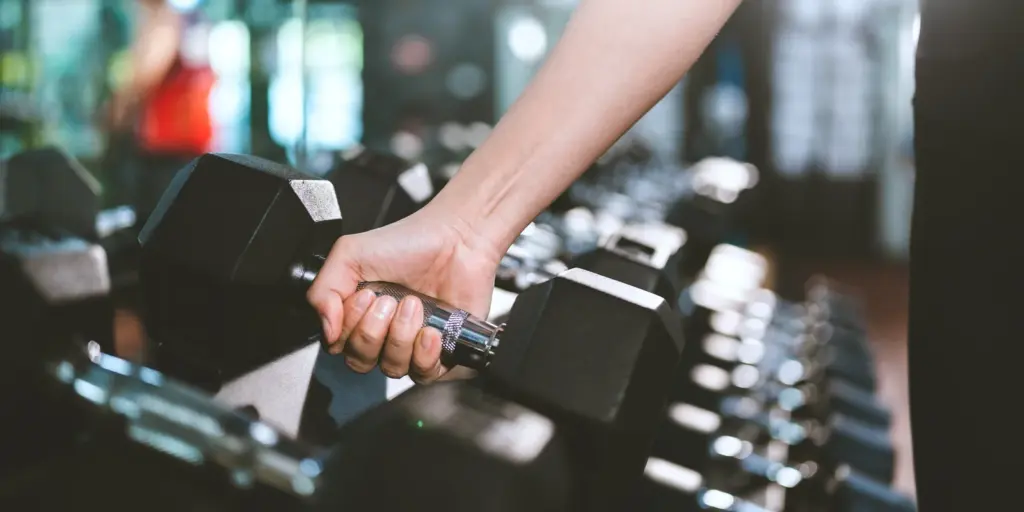
For mild to moderate laxity, non-surgical treatments that stimulate your own collagen can firm and smooth skin over a series of sessions, and rebuilding muscle restores the volume underneath. These are the tools we reach for.
Collagen-stimulating skin treatments
The most effective non-surgical approach is to prompt your skin to rebuild its own collagen and elastin. Scarlet RF microneedling pairs microneedling with radiofrequency energy to firm and tighten from within, and it is one of our go-to options for laxity and crepey texture. Traditional microneedling for facial rejuvenation works on the same principle, and the same technology helps with the stretch marks that often accompany significant weight change. Results build gradually over a series as new collagen forms.
PRP to restore and rejuvenate
Platelet-rich plasma, or PRP, uses growth factors concentrated from your own blood to support tissue renewal. Combining microneedling with PRP can enhance the collagen response and improve skin quality, and our broader PRP treatments are a natural fit for facial volume and texture. PRP and microneedling are cosmetic uses of your own tissue and are not FDA-approved to treat loose skin, results vary, and a series is usually needed.
Rebuilding volume with muscle and body contouring
Firmer skin is only half the picture. Restoring the volume underneath is the other half, and the healthiest way to do that is to rebuild muscle. For targeted areas that diet and exercise have not fully addressed, body contouring can help refine and reshape, all within our natural aesthetics approach.
An honest note on significant excess skin
These non-surgical tools help mild to moderate laxity and volume loss, not large amounts of hanging skin. If you are left with substantial excess skin that folds, chafes, or causes hygiene issues, the appropriate next step is a consultation with a plastic surgeon for skin removal. We will tell you plainly when that is the case, because our treatments are not a substitute for surgical correction.
How Pure Body Health approaches skin after weight loss
We treat loose skin and lost volume as one connected picture: the skin, the muscle beneath it, and the habits that got you here. Because the same two licensed naturopathic physicians who run our medically supervised weight-loss program also handle regenerative and aesthetic care, we can build one plan that protects your skin while you lose and firms it afterward. If you are still weighing your options for the loss itself, our look at whether weight-loss injections are right for you is a good next read. Candidacy is determined in a consultation.
At Pure Body Health in South Tempe, we help you firm loose skin and restore lost volume with collagen-stimulating treatments, PRP, and a plan to rebuild muscle. Book a consultation or call (480) 427-0442.
About the authors. Dr. Scott Maymon, ND, MPH, and Dr. Sarah Stone, ND, are the licensed naturopathic physicians of Pure Body Health in South Tempe, Arizona (AZ licenses #15-1497 and #15-1496). Both earned their doctorates at the Southwest College of Naturopathic Medicine in Tempe, and they work together across hormone and metabolic health, weight management, regenerative medicine, aesthetics, and men’s and women’s health. They have cared for the South Tempe and greater Phoenix community since 2015, and they write and review this content together.
Frequently asked questions
Why does rapid weight loss cause loose skin?
You lose fat faster than your skin and collagen can retract. The skin that once covered a larger body is left with much less underneath to support it. Losing a lot of weight quickly, especially after age 40 or after years of stretching, tends to leave more laxity than slow, steady loss.
How do I tighten skin after weight loss without surgery?
Combine collagen-stimulating treatments with rebuilding muscle. For mild to moderate laxity, radiofrequency microneedling and microneedling with PRP can firm skin over a series of sessions, and resistance training restores volume underneath. Protein, hydration, and a steady pace protect the skin while you lose. Very large amounts of excess skin usually need a surgical consultation.
Why does my face look older or hollow after losing weight?
The face loses its cushioning fat pads along with fat elsewhere. Those pads give the face a soft, youthful shape, so when they deflate the face can look flatter, more hollow, or more lined. It is a common trade-off of fast fat loss, and it responds to collagen-building treatments, PRP, and a slower, muscle-preserving approach.
Can loose skin after weight loss firm up on its own?
Mild laxity often improves over 6 to 12 months as skin gradually retracts, especially in younger skin and after modest loss. Moderate laxity can be helped by collagen-stimulating treatments and rebuilding muscle. Significant hanging skin after very large weight loss generally does not tighten on its own and may need surgical correction.
Which is better for loose skin, building muscle or skin treatments?
They solve different parts of the problem and work best together. Resistance training rebuilds the muscle volume beneath the skin so there is more to fill it, while collagen-stimulating treatments improve the firmness of the skin itself. A plan that combines nutrition, strength work, and in-office treatment usually gives the most natural result.
This article is educational and is not medical advice. It is not intended to diagnose, treat, prevent, or cure any disease. PRP and microneedling are cosmetic uses of your own tissue and are not FDA-approved to treat loose skin; results vary, a series may be needed, and candidacy is determined in a consultation. These treatments address mild to moderate laxity and volume loss and are not a substitute for surgical correction of significant excess skin. Always talk with your healthcare provider about your own situation.