
Written and medically reviewed by Dr. Scott Maymon, ND, MPH and Dr. Sarah Stone, ND, Pure Body Health, South Tempe, AZ.
Key takeaways
- Perimenopause is the transition leading up to menopause, when estrogen and progesterone fluctuate and then gradually decline. It most often begins in the mid-40s and lasts about four years on average.
- The first sign for most women is a change in the menstrual cycle, often alongside new sleep trouble, mood shifts, or the first hot flashes.
- Symptoms span many systems because these hormones affect temperature, sleep, mood, memory, metabolism, and tissue throughout the body.
- It is a normal life stage, not a disease, and the erratic feeling comes from hormones swinging up and down rather than simply fading.
- Symptoms often respond to nutrition, sleep and stress support, and a hormone evaluation. Depending on your goals, bioidentical hormone therapy or peptide therapy may help. What fits is individualized and decided in a consultation.
If you have started to feel like your body is running on slightly different rules than it did a few years ago, you are not imagining it, and you are not alone. Perimenopause is the natural transition that leads up to menopause, and it can touch far more than your monthly cycle. The good news is that these changes have a clear explanation, follow a recognizable pattern, and respond to care. This guide covers what perimenopause is, why the symptoms happen, the full range of what to expect, how long it lasts, and the options that can help.
What is perimenopause?
Perimenopause is the years-long transition before menopause, when your ovaries gradually wind down and your levels of estrogen and progesterone begin to fluctuate and decline. The word literally means “around menopause.” It ends at menopause itself, defined as 12 consecutive months without a menstrual period. Everything before that final milestone, when cycles are still happening but changing, is perimenopause.
It helps to think of it as a normal life stage rather than a disorder. Just as puberty was a hormonal transition into your reproductive years, perimenopause is the transition out of them. If you are wondering whether what you are feeling counts, our companion pieces on signs you may be in perimenopause and this short 10 signs of perimenopause quiz can help you sort it out.
At what age does perimenopause start?
Perimenopause most commonly begins in the mid-40s, but the normal range is wide. Some women notice the first shifts in their late 30s, while others sail through until their early 50s before anything changes. On average, menopause itself arrives around age 51, and perimenopause is the runway leading up to it.
Because the starting point varies so much, age alone is not a reliable way to know where you are. Family history, surgical history, and overall health all play a role. What matters more than the number is the pattern of change you notice over time.
Why do perimenopause symptoms happen?
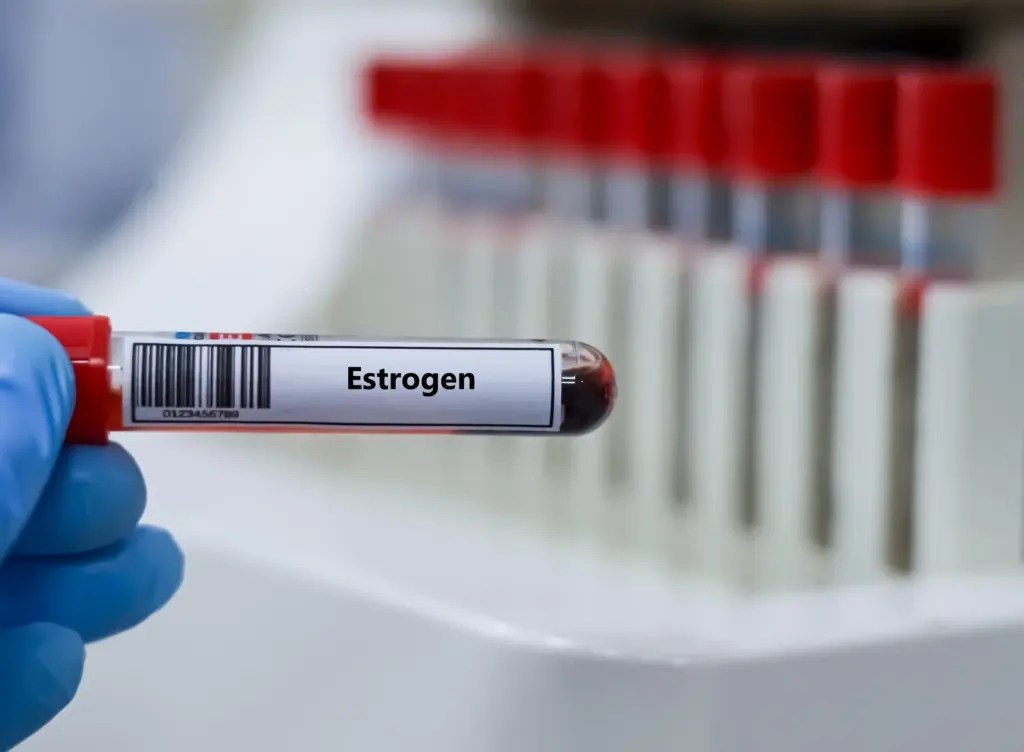
Most perimenopause symptoms trace back to fluctuating and gradually declining estrogen and progesterone. These two hormones do far more than regulate your cycle. They influence body temperature, sleep, mood, memory, metabolism, bone, skin, and the tissues of the vagina and bladder. When their levels swing, every system that relies on them can feel the shift.
The erratic, unpredictable quality of perimenopause comes from hormones swinging up and down, not simply fading away. A single month can carry a hormonal high one week and a steep drop the next, which is why symptoms can come and go.
Progesterone, which has a calming and sleep-supporting effect, often declines first. Estrogen tends to fluctuate more wildly before its final decline, sometimes spiking higher than in your younger years and then dropping sharply. This is why a symptom can appear one cycle, vanish the next, and return later, and why a proper hormone evaluation guides good care.
What are the symptoms of perimenopause?

Perimenopause symptoms span many body systems, and no two women have exactly the same set of symptoms. Some women notice only a few mild changes, while others experience a wider range. Below is an organized guide to the symptoms grouped by the system they affect, so you can recognize them and understand where each one comes from.
Cycle and menstrual changes
For most women this is where perimenopause announces itself first. Periods may come closer together or farther apart, become heavier or lighter, or last a different number of days. You may skip a month and then have two close together, and spotting between periods can occur. These changes reflect the ovaries releasing eggs less predictably and the shifting balance of estrogen and progesterone.
Hot flashes and night sweats
A hot flash is a sudden wave of heat, often in the face, neck, and chest, sometimes with flushing and a racing heart. When they happen during sleep, they are called night sweats and can leave you damp and awake. They stem from estrogen’s effect on the brain’s temperature control center, which grows more sensitive as levels swing.
Sleep changes
Trouble falling asleep, waking in the small hours, and lighter, less restorative sleep are all common. Night sweats can interrupt sleep directly, and falling progesterone removes some of its natural calming effect. Sleep is often one of the most disruptive symptoms because it worsens nearly everything else. Our look at perimenopause insomnia explains the hormonal link and what helps.
Mood, anxiety, and irritability
Estrogen and progesterone both influence brain chemistry, including serotonin and GABA, which shape mood and calm. As they fluctuate, many women notice new or heightened anxiety, low mood, irritability, or a shorter fuse than usual, especially with a history of premenstrual mood changes. We cover this in our piece on the anxiety and depression connection in perimenopause.
Brain fog and memory
Difficulty concentrating, misplacing words, and a general sense of mental fuzziness are real and common. Estrogen supports memory and cognitive processing, so its fluctuations can make focus harder. It is usually temporary and not a sign of anything more serious, though it is understandably unsettling. Our article on perimenopause brain fog explains why it happens and how to support clearer thinking.
Weight and metabolism changes
Many women find that weight, particularly around the midsection, becomes harder to manage even without changing their habits. Shifting hormones, muscle loss that comes with age, and disrupted sleep all play a part. This is common and workable with the right approach, which we explore in our guide to menopausal weight gain.
Libido and vaginal changes
Declining estrogen can reduce the natural moisture and elasticity of vaginal tissue, which may lead to dryness or discomfort. Changes in desire are also common and can stem from hormones, sleep, mood, or a combination. These are treatable and worth raising with a provider you trust rather than living with quietly.
Hair, skin, and joint changes
Estrogen supports collagen and skin hydration, so its decline can bring drier skin, thinning or shedding hair, and a loss of some firmness. Many women also notice new aches and stiffness in the joints, since estrogen has an anti-inflammatory role in the body. These changes are gradual and manageable with nutrition and, where appropriate, hormone support.
How long does perimenopause last?
Perimenopause lasts about four years on average, but the range is broad. For some women it is a matter of months, and for others it stretches to eight or even ten years. It formally ends once you have gone 12 consecutive months without a period, the point that marks menopause. Here is how the stages fit together.
| Stage | What is happening | Typical timing |
|---|---|---|
| Early perimenopause | Cycles still fairly regular but starting to change; hormones begin to fluctuate | Often mid-40s, sometimes late 30s |
| Late perimenopause | Cycles become irregular, longer gaps between periods; symptoms often peak | Usually late 40s to early 50s |
| Menopause | 12 straight months with no period; the transition is complete | Average around age 51 |
| Postmenopause | The years after menopause; hormones settle at a lower, steadier level | The rest of life |
When should you see a provider about perimenopause?
It is worth checking in with a provider whenever symptoms interfere with your sleep, mood, work, or relationships, or whenever you simply want to understand what is happening. You do not have to wait until things feel unbearable or white-knuckle your way through a normal transition.
Some changes deserve prompt attention rather than watchful waiting. Very heavy bleeding, bleeding that lasts much longer than usual, bleeding between periods, or any bleeding after you have gone a full year without a period should be evaluated, as should severe mood changes. A good evaluation looks at your hormones in context alongside thyroid, iron, blood sugar, and other factors that can mimic or worsen these symptoms, which is where a functional medicine approach is especially useful.
You do not have to prove your symptoms are severe enough to deserve help. If perimenopause is affecting your quality of life, that is reason enough to have it evaluated and to explore your options.
How can perimenopause symptoms be treated?
Perimenopause symptoms often respond well to a combination of foundational support and, where appropriate, hormone or peptide therapy. There is no single answer that fits everyone. The right plan depends on your symptoms, health history, and goals, and candidacy for any therapy is determined in a consultation.
Foundational support first
Nutrition that steadies blood sugar and supplies protein and fiber, regular movement that protects muscle and bone, consistent sleep habits, and tools to manage stress all make a genuine difference. These are the foundation, they often ease symptoms on their own, and they make any additional therapy work better.
Hormone evaluation and support
A thorough hormone health evaluation gives you a clear picture of what is actually shifting, rather than guessing from symptoms alone. For many women, bioidentical hormone therapy can help relieve symptoms such as hot flashes, sleep disruption, and vaginal changes when it is appropriate for them. Our women’s hormone optimization therapy is built around this kind of individualized evaluation and support.
Peptide therapy
Pure Body Health is well known among perimenopause patients for peptide therapy, which for some patients may support sleep, energy, body composition, and recovery as part of a broader plan. Peptides are not a stand-alone fix and are not right for everyone, so whether they fit is decided in consultation. Our overview of peptide therapy for menopause explains how it can complement hormone support.
Whichever path is right for you, the goal is the same: to treat the whole picture rather than chase one symptom at a time. For what tends to shift at the very beginning, our guide to the early signs many women notice first pairs well with this one.
At Pure Body Health in South Tempe, two licensed naturopathic physicians help women understand their hormones and feel like themselves again through perimenopause and beyond. If your symptoms are affecting your daily life, a consultation can build a plan around you. Book a consultation or call (480) 427-0442.
About the authors. Dr. Scott Maymon, ND, MPH, and Dr. Sarah Stone, ND, are the licensed naturopathic physicians of Pure Body Health in South Tempe, Arizona (AZ licenses #15-1497 and #15-1496). Both earned their doctorates at the Southwest College of Naturopathic Medicine in Tempe, and they work together across hormone and metabolic health, weight management, regenerative medicine, aesthetics, and men’s and women’s health. They have cared for the South Tempe and greater Phoenix community since 2015, and they write and review this content together.
Frequently asked questions
What are the first signs of perimenopause?
For most women the earliest sign is a change in the menstrual cycle: periods that come closer together or farther apart, or that get heavier or lighter than usual. Many women also notice new sleep trouble, shifts in mood or anxiety, and occasional hot flashes before their cycle changes dramatically. These early shifts often begin in the mid-40s, though they can start earlier.
At what age does perimenopause start?
Perimenopause most commonly begins in the mid-40s, but the normal range is wide. Some women notice changes in their late 30s, and others not until their early 50s. It ends at menopause, defined as 12 straight months without a period, which happens on average around age 51.
How long does perimenopause last?
Perimenopause lasts about four years on average, but the range is broad. For some women it is a matter of months, and for others it stretches to eight or ten years. It formally ends once you have gone 12 consecutive months without a menstrual period, which marks menopause.
Why do perimenopause symptoms happen?
Most perimenopause symptoms trace back to fluctuating and gradually declining estrogen and progesterone. Because these hormones influence temperature, sleep, mood, memory, metabolism, and tissue throughout the body, their ups and downs can affect many systems at once. The unpredictable swings, more than a steady decline, are what make symptoms feel erratic.
Can perimenopause symptoms be treated?
Yes. Symptoms often respond to a combination of nutrition, sleep and stress support, and a hormone evaluation. Depending on your health and goals, options may include bioidentical hormone therapy and, for some patients, peptide therapy. What is appropriate is individualized, and candidacy is determined in a consultation with a licensed provider.
This article is educational and is not medical advice. It is not intended to diagnose, treat, prevent, or cure any disease. Perimenopause care is individualized, and candidacy for any therapy is determined by a licensed provider. Individual results vary. Always talk with your healthcare provider about your own situation.