
Medically reviewed by Dr. Scott Maymon, ND, MPH · ~11 min read · Updated August 2026
Key takeaways
- PT-141 (bremelanotide) is a non-hormonal peptide that acts on desire pathways in the brain — not on hormones or blood flow.
- It’s used on demand, about 45 minutes before intimacy, and typically starts working within 30–60 minutes.
- The FDA-approved form (Vyleesi) is for premenopausal women with HSDD; it’s prescribed off-label for some postmenopausal women after evaluation.
- The most common side effect is nausea (about 40%), usually with the first dose; effectiveness is real but modest and varies by person.
- Dosing should always be individualized by a prescriber — self-dosing gray-market peptide isn’t safe.
Changes in sexual desire during menopause are common and can genuinely affect intimacy and quality of life — and they’re worth taking seriously, not brushing off. PT-141 (bremelanotide) is one option some women consider. It’s a peptide that works through the brain rather than through hormones. Here’s an honest, evidence-based look at what it does, what the research shows, how it’s dosed, its side effects, and who it may (and may not) suit.
What is PT-141 (bremelanotide)?
PT-141, also called bremelanotide, is a synthetic peptide that activates melanocortin receptors in the brain involved in sexual desire. It’s the active ingredient in the FDA-approved medication Vyleesi, and unlike hormone therapy, it’s non-hormonal and doesn’t work by changing blood flow.
Because it targets the brain’s desire pathways directly, PT-141 is sometimes considered for women whose low libido isn’t fully explained and unresolved by hormones alone. It’s used as needed rather than daily, which appeals to women who don’t want another medication to take every day.
What does PT-141 do for women?
In appropriate candidates, PT-141 may increase sexual desire, improve arousal, and boost sexual satisfaction. It works on the wanting side of intimacy — the interest and motivation that many women feel fade during the menopausal transition — rather than on physical performance.
Treatment may help support:
- Increased sexual desire
- Improved arousal and responsiveness
- Greater sexual satisfaction
- A non-hormonal path for women who can’t or prefer not to use hormone therapy
Responses differ from person to person, and for many women the benefit becomes clearer after several uses rather than the very first one.
How does PT-141 work?
PT-141 stimulates melanocortin-4 receptors (MC4R) in the brain — particularly around the hypothalamus — which help govern sexual desire and arousal. This is thought to influence dopamine signaling tied to motivation and pleasure.
That mechanism is what sets it apart. Hormone therapy raises estrogen or testosterone; medications like sildenafil increase genital blood flow. PT-141 does neither — it engages the neurological side of desire. For women whose libido concern is more about interest than physical arousal, that distinction matters, and it’s why PT-141 is described as a non-hormonal, centrally acting option.
Does PT-141 work for women? What the research shows
Clinical trials show PT-141 can produce a real but modest increase in sexual desire and a reduction in the distress that low desire causes. In the phase 3 RECONNECT trials of premenopausal women with HSDD, those using bremelanotide reported greater sexual desire and less distress than the placebo group.
Honesty matters here, because it’s what separates a trustworthy page from a sales pitch: the placebo groups also improved meaningfully, and while the differences were statistically significant, several experts characterized the overall effect as mild. HSDD affects roughly one in ten women, and desire is genuinely multifactorial — so PT-141 is best understood as one tool that helps some women, not a guaranteed fix for everyone. This is exactly why a proper evaluation comes first.
PT-141, menopause, and postmenopausal women
Vyleesi is FDA-approved for premenopausal women with acquired, generalized HSDD, but clinicians may prescribe PT-141 off-label for appropriate postmenopausal women after an individualized evaluation. Its non-hormonal mechanism is a large part of the appeal during and after menopause.
Many menopausal women can’t use — or would rather avoid — hormone therapy, or they’ve addressed hormones and vaginal symptoms and still feel their desire hasn’t returned. Because PT-141 works on brain pathways rather than hormones, it can be considered alongside options like hormone optimization or treatments for vaginal dryness and discomfort, depending on what’s actually driving the change.
PT-141 dosage for women
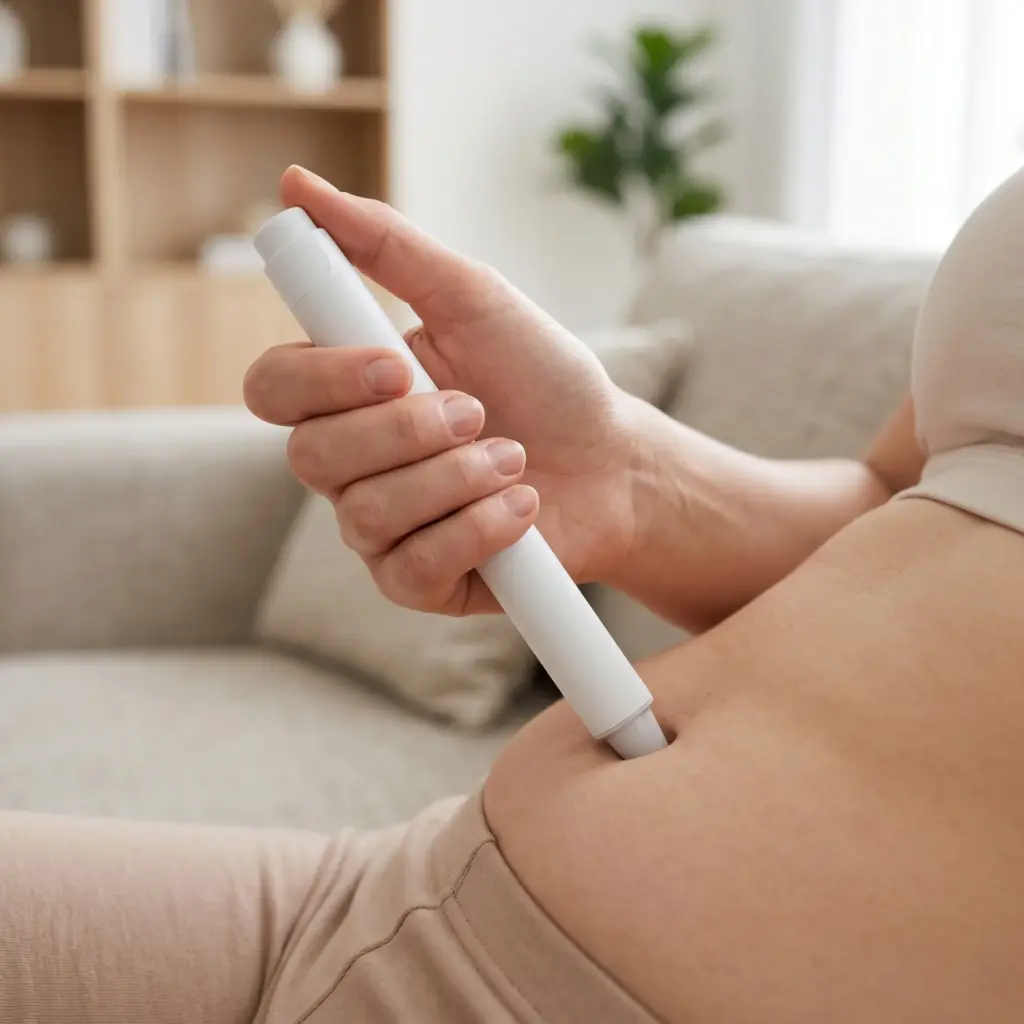
The FDA-approved form, Vyleesi, is a 1.75 mg subcutaneous auto-injector used at least 45 minutes before anticipated sexual activity — no more than one dose in 24 hours and no more than eight doses per month, because more frequent use raises the risk of side effects.
Compounded PT-141 (prepared by a compounding pharmacy) is dosed differently and is always individualized by the prescribing clinician based on your health history and response. There is no universal “dosage chart” or calculator that’s safe to follow on your own.
| Important: PT-141 is a prescription treatment. Buying peptide online and self-dosing is not safe — gray-market products are not quality-controlled for purity or strength, and dosing without medical supervision increases the risk of side effects, including blood-pressure changes. Any PT-141 plan should start with an evaluation and be directed by your prescriber. |
PT-141 forms: injection vs. nasal spray vs. sublingual
The FDA-approved form is a subcutaneous injection. Compounded PT-141 is sometimes prepared as an intranasal (nasal spray) or sublingual form, but the strongest clinical evidence — and the standardized dosing — is for the injectable version.
Historically, bremelanotide was studied intranasally before being developed as the subcutaneous product now on the market. If you’re drawn to a nasal spray or under-the-tongue option, that’s a conversation to have with your provider, who can weigh the evidence, dosing predictability, and your preferences together.
How long does PT-141 take to work, and how long does it last?
PT-141 generally starts working within 30 to 60 minutes, which is why it’s taken about 45 minutes before activity. It’s an on-demand treatment for a specific occasion — not a daily pill — so its effect applies to that window rather than lasting continuously in your system.
This on-demand nature is part of what some women like: you use it when it fits your life, rather than committing to something every day.
PT-141 side effects and safety
The most common side effect is nausea, reported by roughly 40% of users and often strongest with the first dose. Other common effects include flushing (about 20%), injection-site reactions (about 13%), and headache (about 11%).
A few more things worth knowing:
- Blood pressure and heart rate: PT-141 can cause small, temporary rises in blood pressure and a slight drop in heart rate after each dose. In healthy women these changes are minor, but it isn’t appropriate for people with uncontrolled high blood pressure or significant cardiovascular disease.
- Skin darkening: rarely, and mostly with repeated or excess use, focal darkening of the skin or gums can occur (more likely in those with darker skin), because the same receptors influence pigment cells.
- Medication absorption: it can slow stomach emptying, which may affect how oral medications are absorbed if taken around the same time.
- Pregnancy: PT-141 isn’t used during pregnancy, and contraception is advised while using it.
Severe nausea sometimes leads women to use an anti-nausea medication or to stop treatment — one more reason it belongs under medical supervision.
PT-141 vs. hormone therapy vs. Addyi (flibanserin)
These options treat low desire in very different ways. Here’s how PT-141 compares with the two other common approaches.
Comparing treatments for low sexual desire in women
| PT-141 (bremelanotide) | Hormone therapy (HRT / testosterone) | Addyi (flibanserin) | |
|---|---|---|---|
| How it works | Brain melanocortin receptors (non-hormonal) | Replaces estrogen and/or testosterone | Adjusts brain serotonin/dopamine (non-hormonal) |
| When taken | On demand, ~45 min before | Ongoing / daily | Daily, at bedtime |
| Form | Injection (approved); compounded options vary | Cream, patch, pellet, gel, oral | Oral tablet |
| Considerations | Nausea; transient BP rise | Depends on hormone & route | Daily use; alcohol interaction; drowsiness |
None of these is automatically “best.” The right choice depends on what’s driving your low desire — which is what a thorough evaluation is designed to uncover.
Can PT-141 be combined with other treatments?
Yes — because low desire often has more than one cause, PT-141 is sometimes used alongside other therapies. Depending on your evaluation, that might mean pairing it with hormone optimization, treatment for vaginal dryness, or pelvic and regenerative therapies.
Some compounding pharmacies also prepare PT-141 in combination formulations (for example, with oxytocin), and these are always prescriber-directed and individualized rather than something to assemble yourself. Our peptide therapy and women’s sexual health programs are built around matching the therapy — or combination — to the actual cause.
Who is a good candidate for PT-141?
PT-141 may be appropriate for women with acquired, generalized HSDD — low sexual desire that developed after a period of normal desire and that causes personal distress. The distress piece matters: if low libido doesn’t bother you, there’s nothing that needs treating.
It’s generally not the answer when low desire is driven mainly by a relationship issue, another medical or psychiatric condition, or a medication’s side effects — those are better addressed directly. That’s why a comprehensive evaluation looks at hormones, medications, medical history, menopause symptoms, mood, and relationship factors before PT-141 is recommended. You can read more in our overview of sexual dysfunction in women.
What to expect and realistic results
If PT-141 is recommended, you’ll get clear instructions on how and when to use it, a review of side effects, and an honest conversation about realistic results. When it works, women may notice more desire, better responsiveness during intimacy, and greater satisfaction.
Set expectations sensibly: not everyone responds, effects can take a few uses to assess, and PT-141 improves desire rather than “performance.” Your response is monitored over time so your provider can decide whether to continue it or explore a better-fitting option.
Women’s sexual health care at Pure Body Health
At Pure Body Health, Dr. Scott Maymon, ND, MPH and Dr. Sarah Stone, ND take a comprehensive approach to sexual wellness — evaluating the hormonal, medical, and lifestyle factors that can affect libido rather than reaching for a single fix.
If PT-141 is a fit, it’s provided the safe way: prescribed and supervised after a real evaluation, not sourced from an unregulated seller. Depending on your needs, your plan may combine PT-141 with hormone optimization, peptide therapy, or lifestyle support — matched to what’s actually affecting your sexual health.
Talk with a provider about low libido in Tempe, AZ
Find out whether PT-141 or another approach fits your goals, with a private, judgment-free evaluation. Call (480) 427-0442 or visit us at 1553 W Todd Dr #106, Tempe, AZ 85283. We serve South Tempe, Scottsdale, Chandler, and the greater Phoenix area. Request an appointment.
Frequently asked questions
What does PT-141 do for women?
It acts on melanocortin receptors in the brain that regulate sexual desire, and in appropriate candidates it may increase desire, improve arousal, and raise satisfaction. It’s non-hormonal and works on brain pathways, not blood flow.
What is the dosage of PT-141 for women?
The FDA-approved form, Vyleesi, is a 1.75 mg subcutaneous auto-injector used at least 45 minutes before activity, max one dose per 24 hours and eight per month. Compounded PT-141 dosing is individualized by your prescriber. It should never be self-dosed from gray-market products.
How long does PT-141 take to work and how long does it last?
It generally begins working within 30–60 minutes, so it’s taken about 45 minutes before activity. It’s an on-demand treatment for a specific occasion rather than a daily medication.
What are the side effects of PT-141 in women?
Most common is nausea (~40%, often with the first dose), then flushing (~20%), injection-site reactions (~13%), and headache (~11%). It can cause small, temporary blood-pressure increases, and rarely skin darkening with repeated use. It isn’t used in pregnancy or with uncontrolled cardiovascular disease.
How does PT-141 differ from hormone replacement therapy?
PT-141 activates brain receptors involved in desire rather than increasing estrogen or testosterone, making it a non-hormonal option for appropriate candidates — including some women who can’t or prefer not to use hormones.
Can PT-141 be used by postmenopausal women?
Vyleesi is FDA-approved for premenopausal women with acquired, generalized HSDD, but it may be prescribed off-label for appropriate postmenopausal women after an individualized medical evaluation.
Does PT-141 come as a nasal spray?
The FDA-approved form is a subcutaneous injection. Compounded PT-141 is sometimes prepared as an intranasal or sublingual form, but the strongest evidence is for the injectable version. Which form is appropriate is a decision for your prescriber.
Does PT-141 work by increasing blood flow?
No. Unlike some medications for sexual dysfunction, PT-141 works mainly by activating brain receptors involved in sexual desire, not by increasing blood flow.
Medical references
- National Institutes of Health, LiverTox. Bremelanotide. ncbi.nlm.nih.gov/books/NBK573221
- Dhillon S, et al. Bremelanotide for Treatment of Female Hypoactive Sexual Desire. Neurology International. 2022. pmc.ncbi.nlm.nih.gov/articles/PMC8788464
- Kingsberg SA, et al. Bremelanotide for HSDD (RECONNECT). Obstet Gynecol. 2019. pubmed.ncbi.nlm.nih.gov/31599840
- Mayo Clinic. Bremelanotide (subcutaneous route). mayoclinic.org
Medical disclaimer
This article is for educational purposes and is not a substitute for personalized medical advice. PT-141 (bremelanotide) is a prescription treatment; the FDA-approved indication is for premenopausal women with acquired, generalized HSDD, and other uses are off-label. Individual results and suitability vary. Do not obtain or self-administer PT-141 without a prescription and medical supervision. Consult a qualified provider to determine what’s appropriate for you.